Buying a Second-Hand Bike or E-bike on the Internet Safely and Smartly
The market for second-hand bikes in the Benelux is growing explosively. Whether you are looking for a reliable city bike for the flat polders in the Netherlands or a powerful e-bike for the hilly Flemish Ardennes, platforms like Marktplaats and 2dehands.be are full of them.
However, there are significant catches to buying a bike online. From sophisticated phishing tricks to hidden defects in expensive e-bike batteries. As a technical specialist at Velospots, I will explain exactly how to separate the wheat from the chaff, prevent scams, and purchase a technically sound bike.
1. Prevent Scams on Marktplaats and 2dehands.be
The search starts online, but unfortunately, online marketplaces are also a breeding ground for fraud. Criminals are using increasingly smarter techniques.
- Stay on the platform: Do not respond to requests to continue the conversation via WhatsApp. Fraudsters try to lure you outside the platform's safety systems with this.
- Use Buyer Protection: Marktplaats offers the 'Buyer Protection' service. With this, your money is held securely until you have actually received the bike (in good condition).
- Beware of payment links and Payconiq: A well-known trick is the '1-cent payment' via a fake Tikkie or Payconiq link to steal your bank details (phishing). Always pay directly in cash upon transfer or use the integrated payment request from Marktplaats/2dehands.be itself.
2. Check if the Bike is Stolen (The Geo-Check)
The Benelux is increasingly working together against cross-border bike theft. It is your responsibility as a buyer to check that you are not committing fencing. Always ask the seller for the frame number (often stamped under the bottom bracket or on the seat tube) in advance.
Country / Region
Register
How it works
Netherlands
Stop Heling (RDW)
Enter the frame number on the Stop Heling website or app. You will immediately see if the bike is registered as stolen with the police.
Belgium
MyBike Register
The recently launched central platform (MyBike.belgium.be) allows you to request the status of the bike immediately via a QR sticker or frame number.
Germany (Border region)
Fahrradpass
In border regions (such as North Rhine-Westphalia), watch out for bikes with a ground-off number or German 'Fahrradpass' registrations.
3. Technical Inspection on Location: The M-Check
Never buy a bike without a test ride. Use the 'M-Check' (follow the shape of the letter M over the bike) for a quick, systematic check:
- Front wheel and Hub: Lift the front wheel and give it a spin. It should turn smoothly without any 'gritty' noise from the hub. Check for loose spokes.
- Cockpit (Handlebars & Fork): Squeeze the front brake and push the bike forwards and backwards. Do you feel any play? Then the headset bearing is worn or loose.
- Bottom bracket and Pedals: Grab both crank arms (where the pedals are attached) and move them sideways. Play here indicates a worn bottom bracket, an expensive repair.
- Saddle and Frame: Check welds around the seat post and bottom bracket for hairline cracks. This is crucial with aluminum and carbon frames.
- Rear wheel and Drivetrain: Check the wear on the cassette (the gears). Do the teeth look like sharp shark fins? Then the cassette and the bike chain need to be replaced.
4. Specific Dangers with Second-Hand E-bikes
A second-hand e-bike is a fantastic alternative to a new one, but the electronics add a huge risk.
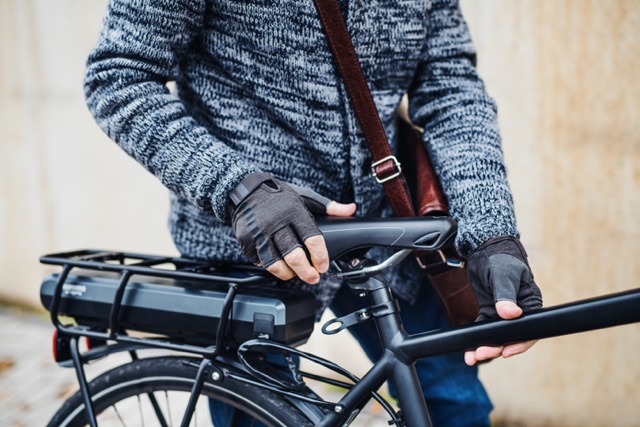
- The Battery Issue: The battery is the most expensive part. Always ask for an accurate test report (printout from the dealer) or check via the display how many charging cycles the battery has had. A battery loses an average of 10% capacity per year.
- The 'Closed System' Risk (VanMoof & Sparta ION):
- VanMoof: After the bankruptcy, many specific parts (such as the e-shifter) are scarce. Never buy a VanMoof S3 without an error-free display, and know that you are dependent on specialized refurbishers like Upway.
- Sparta ION / Batavus: Models with the old ION system have closed software. You cannot simply replace a battery or motor with generic parts without a dealer 'registering' (pairing) the system via software. Make sure everything works electronically during the test ride.
5. Legal: Ensure a Sales Agreement
Are you satisfied? Draw up a Sales agreement between private individuals (Bill of Sale). In it, note:
- Details of buyer and seller.
- Make, model, color, and frame number.
- Agreed price.
- Statement from the seller that the bike is his/her legitimate property.
This document protects you legally should the bike later turn out to be registered as stolen.
🛠️ Velospots Toolbox: What should you bring to the viewing?
- Smartphone: For checking the frame number (Stop Heling/MyBike) and the bank app.
- Flashlight: To clearly illuminate hairline cracks in the frame or wear on the gears.
- Chain wear indicator: A €10 tool that tells you immediately if the drivetrain is worn out.
- Printed contract: Two copies of a standard sales agreement for private individuals.
💰 Mobility Insights: Cost-Benefit Analysis
A second-hand high-end e-bike quickly costs between €1,000 and €2,000. When purchasing, keep in mind a hidden budget of €200 - €400 for inevitable deferred maintenance (new brake pads, tires, or a chain).
Alternative: Are you employed in Belgium or the Netherlands? Then consider bike leasing via the employer. With a gross salary exchange, you often ride a brand-new e-bike including comprehensive insurance and a maintenance contract for the same net monthly amount as the depreciation on a second-hand bike.
💡 Next Step
Have you snapped up the perfect second-hand e-bike? Make sure the expensive battery stays in top condition for the coming years.